Bathed deep in fever dreams, he held a frame
That claimed to hold the whole of sun and sky.
It alchemised a clock to travel back through shame,
To mend what broke the first and only time.
His thoughts, too frail to shoulder mortal strain,
Were pressed beneath the wrath of distant gods.
Anger once drove him out of his home
Love led him to find it in another soul.
But love, when steeped too long in fear, grows sore
And fear turns sharp and swallows anger whole.
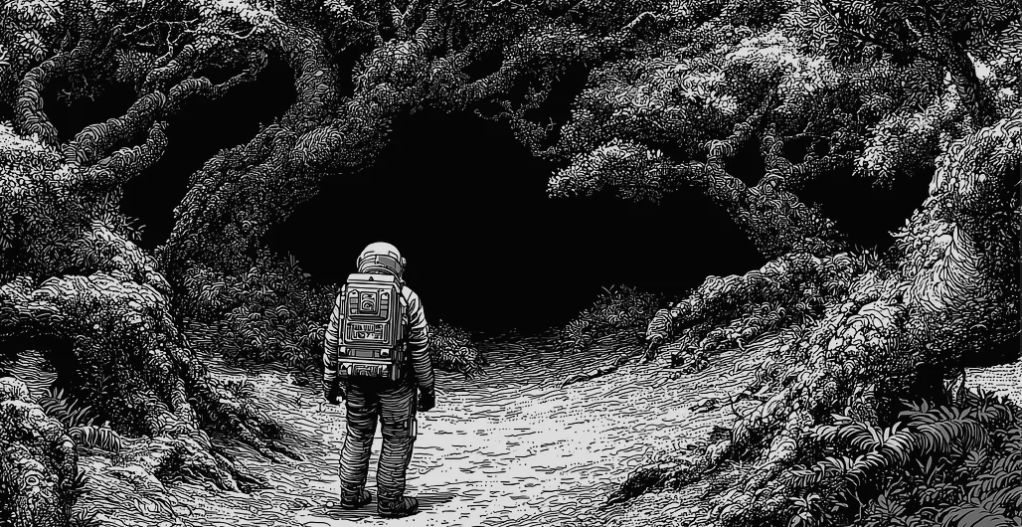
Thus, once again, he’s exiled from himself,
Cast from the chambers of his soul by his lover instead.
Now, he speaks in tongues, understood in forgotten lands.
Strange floods of ruin gather in his chest.
The inner rivers shrink beyond their reach,
While outer tremors leave his body paralysed.
He stands accused by what he chose to flee,
Becomes the root cause of his own exile. Anger.
Still he asks,
When does fear grow into rage?
At what thin seam does soul slip out of breath?
Which ticking second could he have stopped?
Which silent pulse could have made time stand still?
Answers dissolve and harden into doubt.
Self-knowledge becomes insufficient
His measured lines and rhymes, incompetent
The magic that was given was taken in an instant.
Maybe he’ll find the answer another day, another lifetime.
[564] The Will To Not Inherit
 Smoke words every day.
One response to “[564] The Will To Not Inherit”
This is a truly exceptional piece of writing Rahul. You’ve woven a profound and aching mythology of the self, where internal landscapes—fever dreams, shrinking rivers, distant gods—map perfectly onto the external catastrophe of a broken relationship. The central paradox is devastating: the very love that offered a home becomes the instrument of a deeper exile, and the escape from one form of anger leads to being consumed by another.
Your command of language is remarkable. Phrases like “alchemised a clock to travel back through shame,” “fear turns sharp and swallows anger whole,” and “strange floods of ruin gather in his chest” are not just beautiful; they are precise instruments of emotion. The poem moves with the rhythm of a tragic incantation, building to those haunting, unanswered questions that hang in the air like smoke.
This is more than a poem about a loss; it’s an excavation of the moments where identity fractures, where the stories we tell ourselves become “insufficient.” The final note—”Maybe he’ll find the answer another day, another lifetime”—does not feel like despair, but like a raw, honest ache that grants the whole piece a solemn dignity. Thank you for sharing such a powerful and beautifully crafted work.🤝
LikeLike